
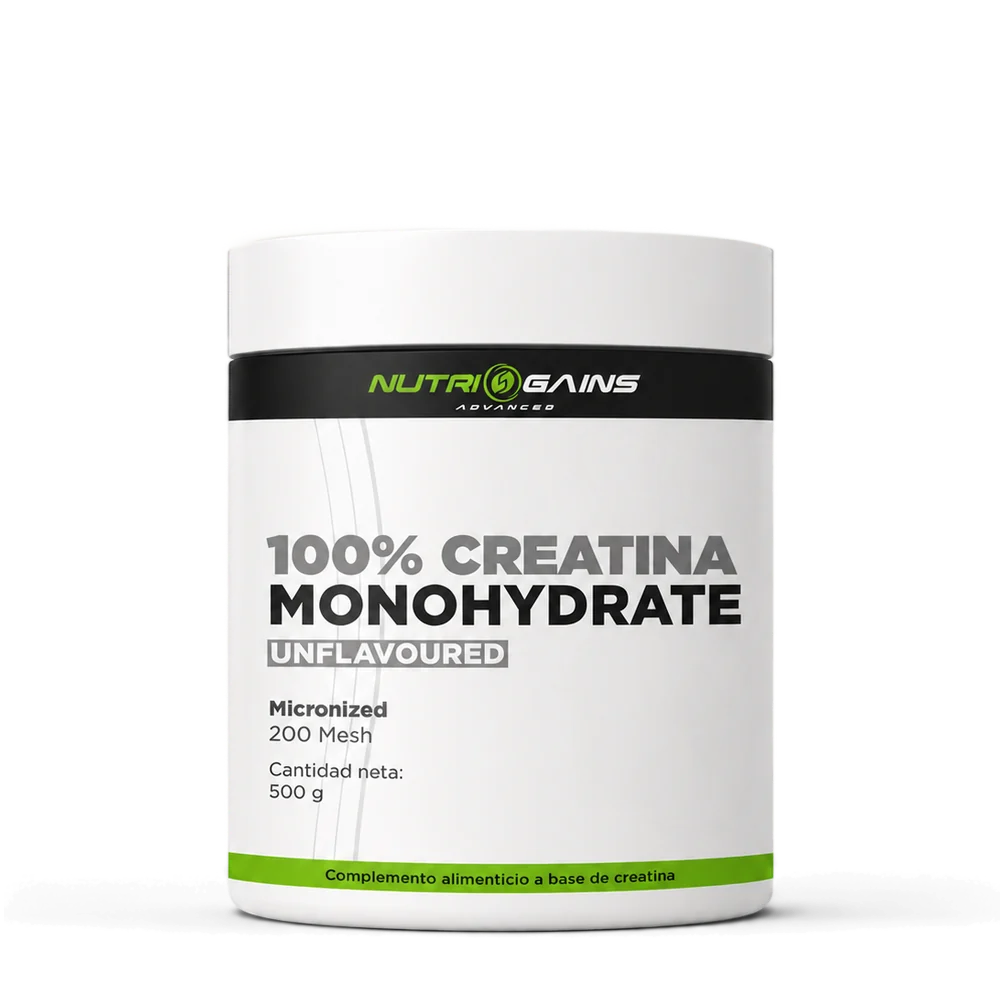
What happens when you start taking creatine
Creatine is an osmotically active molecule: when it enters the muscle cell, it draws water in with it. That is why, when you start, your muscle creatine stores rise and, with them, their water content.
That water is inside the muscle fibre. It is part of the cell’s own hydration and of the normal functioning of the phosphocreatine system.
How much your weight can change
During the first few weeks it is normal to see a slight increase on the scales. With the 3 g daily dose and no loading phase, the change is gradual and settles as soon as your stores are full.
Creatine has no calories: that weight is water in the muscle, not fat.
Why it is a good sign
Muscle storing more creatine means your phosphocreatine reserve is fuller, and that is exactly the reserve that regenerates ATP during intense efforts:
Creatine increases physical performance in successive bursts of short-term, high intensity exercise.
The beneficial effect is obtained with a daily intake of 3 g of creatine. Intended for adults performing high intensity exercise.
Practical tips
- No loading phase: 3 g per day from day one for a gradual change.
- Hydration: drink water regularly throughout the day, especially if you train.
- Consistency: take it every day; fluctuations settle once your stores stay full.
- Look in the mirror and at your numbers: training performance is the best indicator.
Frequently asked questions
Does creatine cause water retention?
Muscle stores creatine together with water, inside the muscle fibre itself. It is part of how it normally works.
How much weight can I gain when I start?
A slight increase during the first few weeks, which settles once your stores are full. With 3 g per day and no loading phase, the change is gradual.
Does creatine make you fat?
It has no calories. The initial weight is water inside the muscle.
Do I need to drink more water?
Staying well hydrated throughout the day is always a good idea, especially if you train.
Sources
- Antonio et al. (2021): common questions and misconceptions about creatine, according to the evidence
- Kreider et al. (2017): ISSN position stand on the safety and efficacy of creatine
- Kreider et al. (2022): bioavailability, efficacy and safety of creatine
- Regulation (EU) No 432/2012: authorised health claims