
Muscle: your reserve for the years ahead
From middle age onwards, muscle mass and strength tend to decline progressively. When that loss becomes marked, medicine calls it sarcopenia. The good news is that muscle responds to training at any age.
Maintaining strength means maintaining independence: climbing stairs, carrying the shopping, playing with your grandchildren or carrying on with sport.
What European regulation recognises
Daily creatine consumption can enhance the effect of resistance training on muscle strength in adults over the age of 55.
With 3 g of creatine per day in conjunction with resistance training that increases the workload over time, at least three times per week for several weeks, at an intensity of at least 65-75% of one repetition maximum.
In practice, the conditions are clear:
- 3 g of creatine per day.
- Resistance training (strength) at least three times a week.
- Progressive load: increase the weight over time.
- Enough intensity: at least 65-75% of the maximum you can lift once.
- Consistency: for several weeks.
What effective strength training looks like
- Basic exercises: squat, deadlift, press, row and their variations.
- Technique first: start with comfortable loads and, if you can, with guidance from a professional.
- Progression: raise the load gradually when you complete your reps with good technique.
- Three sessions a week, with at least one rest day between them.
How to take creatine
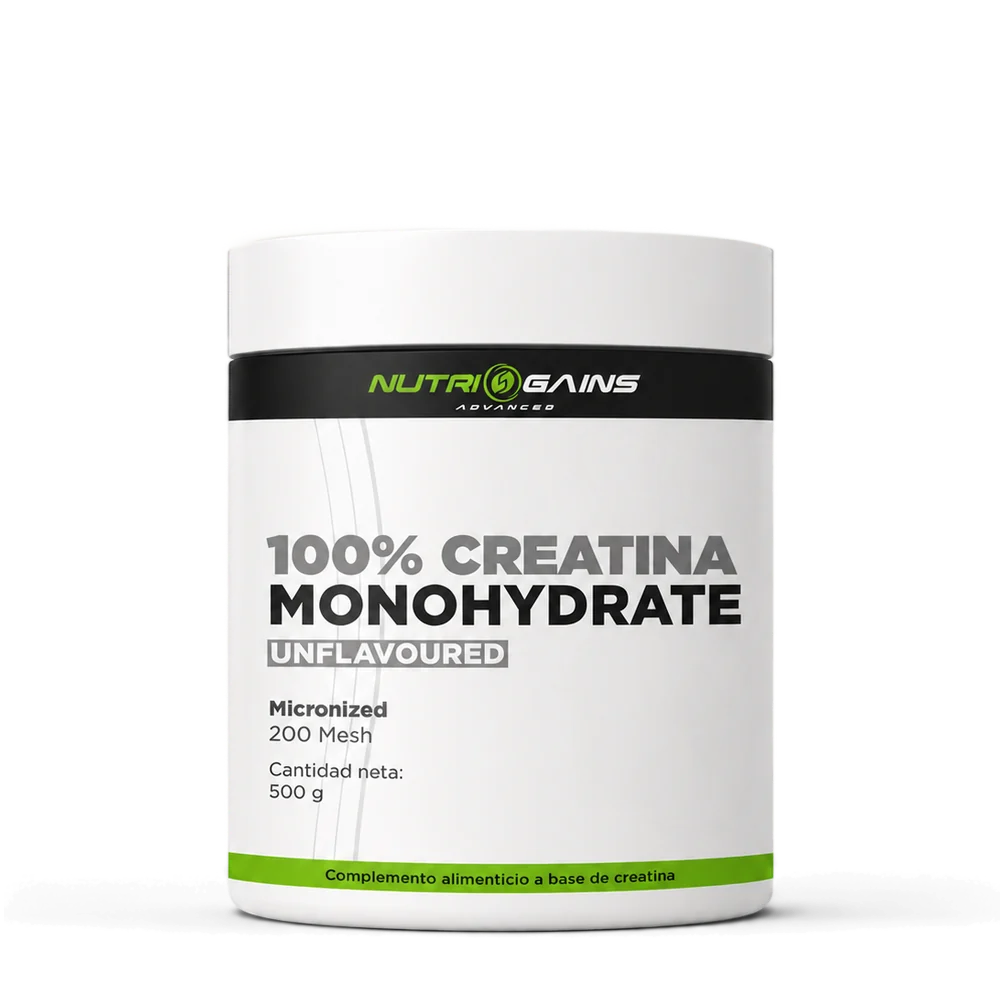
One scoop (3 g) a day, dissolved in water, juice or a shake. Any time is fine: what counts is taking it every day, rest days included. A 500 g tub gives up to 166 servings.
Complete your routine
Muscle works better with a solid nutritional foundation. Magnesium and omega-3 complete the ritual:
- Magnesium contributes to normal muscle function.
- Magnesium contributes to the maintenance of normal bones.
- DHA contributes to maintenance of normal brain function.
EU-authorised health claims. Magnesium: 2 capsules provide 200 mg. DHA: from 250 mg per day; our omega-3 provides 360 mg.
Safety
Creatine monohydrate is one of the most studied supplements, including in older adults. If you have kidney disease or are on medical treatment, check with your doctor first.
Frequently asked questions
Is creatine useful after 50?
Yes. And from 55 it has a specific recognised benefit: daily creatine consumption can enhance the effect of resistance training on muscle strength.
How much creatine should I take?
3 g per day, together with strength training at least three times a week.
Do I have to go to the gym?
You need resistance training with progressive load. The gym is the most practical option, but you can also train at home with dumbbells, bands or your own bodyweight, always increasing the difficulty.
Can women take it during the menopause?
Yes. Creatine has been studied in adult men and women and the dose is the same: 3 g per day.
Sources
- Commission Implementing Regulation (EU) 2017/672: creatine and muscle strength in adults over 55
- EFSA (2016): creatine in combination with resistance training and muscle strength
- Chilibeck et al. (2017): creatine and strength training in older adults, meta-analysis
- Cruz-Jentoft et al. (2019): revised European consensus on sarcopenia
- WHO (2020): guidelines on physical activity and sedentary behaviour