
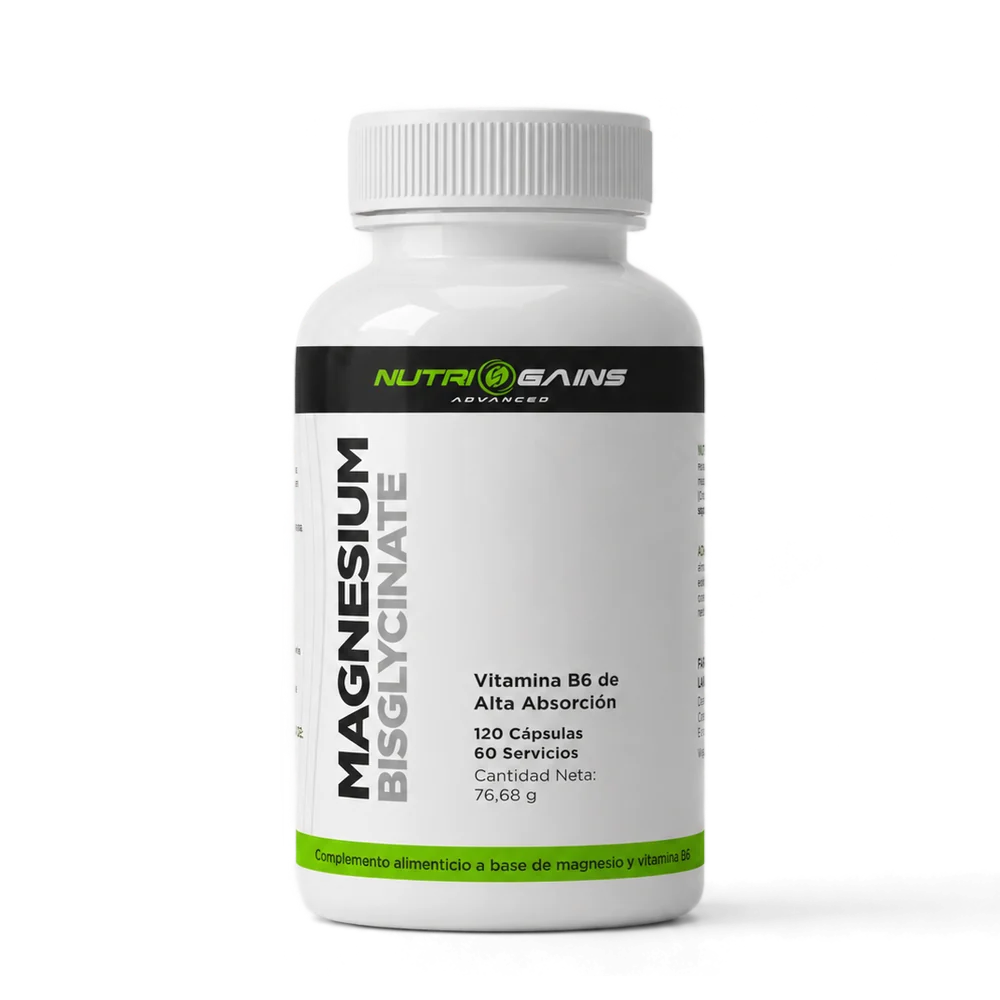
Magnesium, the mineral of 300 reactions
Magnesium is a cofactor in more than 300 enzyme systems: energy production, protein synthesis, muscle contraction and relaxation, and nerve transmission. Your body contains about 25 g, more than half of it in your bones.
A key fact for biohacking: ATP, your cells’ energy molecule, is biologically active when bound to magnesium. Without magnesium, cellular energy does not flow.
EFSA sets an adequate intake of 350 mg per day for adult men and 300 mg for adult women.
What bisglycinate is
In bisglycinate, each magnesium atom is bound to two molecules of glycine, the smallest amino acid. This bond forms a chelated, ring-shaped structure that is stable and very well tolerated by the digestive system.
Why with vitamin B6
Vitamin B6 is a coenzyme in more than a hundred reactions and works in the same processes as magnesium: energy, the nervous system and psychological function. That is why we formulate them together.
Your 2-capsule serving provides 6 mg of B6, within the daily maximum of 12 mg set by EFSA for adults from diet and supplements combined.
Authorised benefits
Magnesium and vitamin B6 together have 16 health claims authorised in the European Union:
Energy
- Magnesium contributes to a reduction of tiredness and fatigue.
- Vitamin B6 contributes to the reduction of tiredness and fatigue.
- Magnesium contributes to normal energy-yielding metabolism.
- Vitamin B6 contributes to normal energy-yielding metabolism.
Nervous system and mind
- Magnesium contributes to normal functioning of the nervous system.
- Vitamin B6 contributes to normal functioning of the nervous system.
- Magnesium contributes to normal psychological function.
- Vitamin B6 contributes to normal psychological function.
Muscle and bones
- Magnesium contributes to normal muscle function.
- Magnesium contributes to electrolyte balance.
- Magnesium contributes to normal protein synthesis.
- Magnesium contributes to the maintenance of normal bones.
- Magnesium contributes to the maintenance of normal teeth.
Metabolism and defences
- Vitamin B6 contributes to normal homocysteine metabolism.
- Vitamin B6 contributes to the normal function of the immune system.
- Magnesium has a role in the process of cell division.
EU-authorised health claim. Your 2-capsule serving provides 200 mg of magnesium (53% NRV) and 6 mg of vitamin B6 (429% NRV).
How much to take
The label allows 1 to 2 capsules per day. We suggest the full serving: 2 capsules, providing 200 mg of elemental magnesium, 53% of the daily reference value.
Your daily serving against the reference value
When to take it
In the evening, with a glass of water, to close the day: it is the third moment of the NG Advanced ritual. We tell you more in Magnesium at night: your wind-down ritual.
If you take any medication, such as certain antibiotics, levothyroxine or bisphosphonates, your doctor or pharmacist will tell you how many hours apart to take them.
How to read the label
Always look at the elemental magnesium: the real amount of magnesium your body receives, not the weight of the compound. It is the figure that lets you compare any magnesium. We explain it in depth in Types of magnesium and elemental magnesium.
Frequently asked questions
What is magnesium bisglycinate for?
Magnesium contributes to a reduction of tiredness and fatigue and to normal functioning of the nervous system, normal muscle function, normal energy-yielding metabolism and normal psychological function, among other authorised benefits.
How many capsules do I take?
2 capsules a day with a glass of water: 200 mg of elemental magnesium and 6 mg of vitamin B6. The label allows you to start with 1.
Why bisglycinate?
Because it is magnesium chelated with glycine, a stable form that is very well tolerated by the digestive system.
How long does a bottle last?
120 capsules: 60 servings of 2 capsules, two months of your ritual.
Can I take it with the creatine and omega-3?
Yes, that is Pack Vida: omega-3 in the morning, creatine during the day and magnesium + B6 in the evening.
Sources
- Regulation (EU) No 432/2012: authorised health claims
- EFSA (2010): scientific opinion on magnesium health claims
- EFSA (2015): dietary reference values for magnesium
- De Baaij et al. (2015): magnesium in man, implications for health and disease
- EFSA (2023): tolerable upper intake level for vitamin B6
- NIH, Office of Dietary Supplements: magnesium